
What salt air and Florida sun do to your paint and headlights
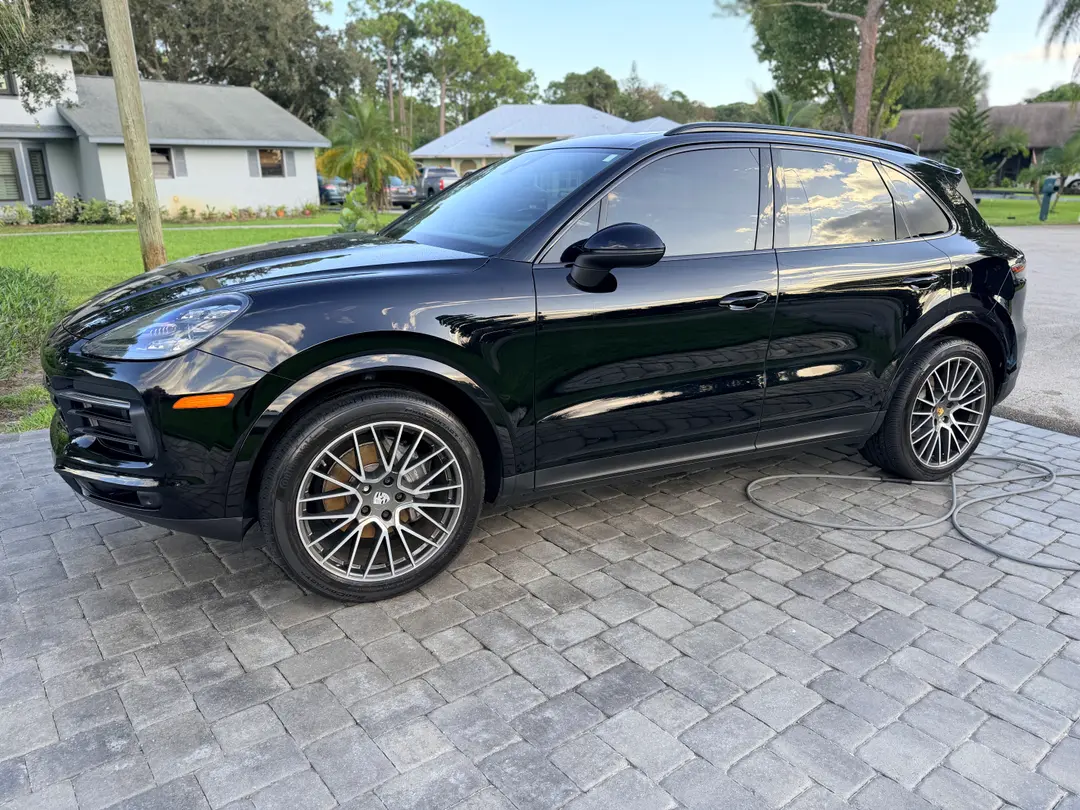
Salt air leaves a film that holds moisture on your paint, chrome and wheels, and the Florida sun fades clear coat, trim and headlight lenses. Neither does damage overnight. Together they wear a car down a little every week, so the fix is a steady routine plus a layer of protection.
Why is Fort Pierce so hard on a car’s finish?
Because of where the city sits. Fort Pierce is on the Atlantic, with an inlet, marinas and 1.3 miles of beach (source). The climate runs from humid subtropical to tropical, so heat and moisture stay high most of the year.
That puts three things on a parked car at once:
- Salt. Ocean air carries salt inland, and it settles on paint, wheels and the underside. Florida’s salt air is a known cause of corrosion on both coasts (source).
- Sand. Beach sand rides home on shoes, towels and tires. On paint it acts like fine sandpaper when you wipe it dry.
- Sun. Strong UV most of the year breaks down clear coat, plastic trim, dashboards and headlight lenses.
A car that lives near the Fort Pierce City Marina, on Hutchinson Island or along Indian River Drive gets more of all three than one parked in a garage inland.
What does salt air do to paint?
Salt itself does not eat paint in a day. The problem is what it holds. A salty film pulls moisture out of humid air and keeps it against the surface. On bare metal, rock chips and the edges of panels, that speeds up rust.
You’ll usually see it first in these spots:
- Wheels and brake dust. Salt mixes with dust and bakes onto the wheel face.
- Chrome and bright trim. Pitting and cloudy spots show up around badges and window trim.
- Rock chips. A chip on the hood or front bumper is bare metal, and salt finds it.
- Lower panels and the underside. Spray from wet roads near the water collects there.
A regular wash takes the film off before it builds. A layer of wax, sealant or coating means the salt sits on that layer instead of your clear coat.
What does the Florida sun do to paint, trim and headlights?
UV does slow, steady damage. Clear coat loses gloss and can start to haze, then peel on older cars. Black plastic trim turns gray. Dashboards dry out and crack. General Florida weather guides list sun and heat as the main threats to both paint and interiors (source).
Headlights take it hardest. Most lenses are plastic with a thin factory UV layer. Once that layer wears through, the lens turns yellow and cloudy. That cuts how far your lights reach at night, and it makes the whole car look older.
What can you do at home?
A few habits cover most of it:
- Rinse after the beach or the marina. Fresh water on the wheels, lower panels and front end takes off salt and sand before it sets.
- Never wipe a dusty car dry. Sand and salt crystals scratch. Rinse first, then wash with a clean mitt.
- Park in shade when you can. A carport, a garage or the shady side of the lot cuts UV hours a lot.
- Use a sunshade. It keeps the dash and seats cooler and slows cracking.
- Keep protection on the paint. Wax wears off faster in Florida heat, so plan to reapply it.
Wax, sealant or ceramic coating: which holds up best here?
It depends on how long you keep the car and how much it sits outside.
An Exterior Wash & Wax is the simple option. One customer review describes a wax that cures in about 24 hours and keeps its shine about 6 months. That fits someone who wants a fresh layer twice a year.
A ceramic coating lasts longer and sits harder on the paint. Salt, sand and bugs rinse off it more easily, and it slows UV fading. The trade is more prep up front, because the paint has to be clean and polished before the coating goes on.
If your paint already has swirls or dull patches, paint correction comes first. A coating locks in whatever is under it, good or bad.
How much does protection cost with us?
Here’s where our starting prices sit:
| Service | Starting price |
|---|---|
| Exterior Wash & Wax | Free quote |
| Ceramic Coating | From $699 |
| Paint Correction | From $350 |
| Headlight Restoration | Free quote |
Ceramic and paint correction take a 25% deposit to book. Every tier and vehicle size is on our pricing page.
When should you call a pro?
Call for help when home care stops working:
- The headlights are yellow or foggy. Polishing compounds from the store fade quickly. Headlight restoration takes off the damaged layer and protects the lens again.
- The paint feels rough after a wash. That’s salt and fallout stuck to the clear coat. It needs a clay or decontamination step.
- The gloss is gone or the paint looks hazy. Polishing can bring it back if the clear coat is still there.
- You just bought a car you plan to keep. Coating it early protects the factory finish before the sun and salt get to it.
The short answer
Salt air holds moisture on your car, and the sun fades everything it touches. Rinse after the beach, park in shade and keep a layer of protection on the paint. When the lenses yellow or the gloss fades, it’s time for a detail. We come to your driveway, office lot or marina across the Treasure Coast. See the price list or book a visit.